国立情報学研究所 - ディジタル・シルクロード・プロジェクト
『東洋文庫所蔵』貴重書デジタルアーカイブ
|
|
カラー画像サムネイル -
目次 -
ページ番号 -
書誌情報(メタデータ) -
キャプション -
カラー画像 -
白黒高解像度画像 -
見開きページ -
グラフィック -
| 0335 |
The Book of Ser Marco Polo : vol.2 |
| マルコ=ポーロ卿の記録 : vol.2 |
 引用情報
OCR読み取り結果
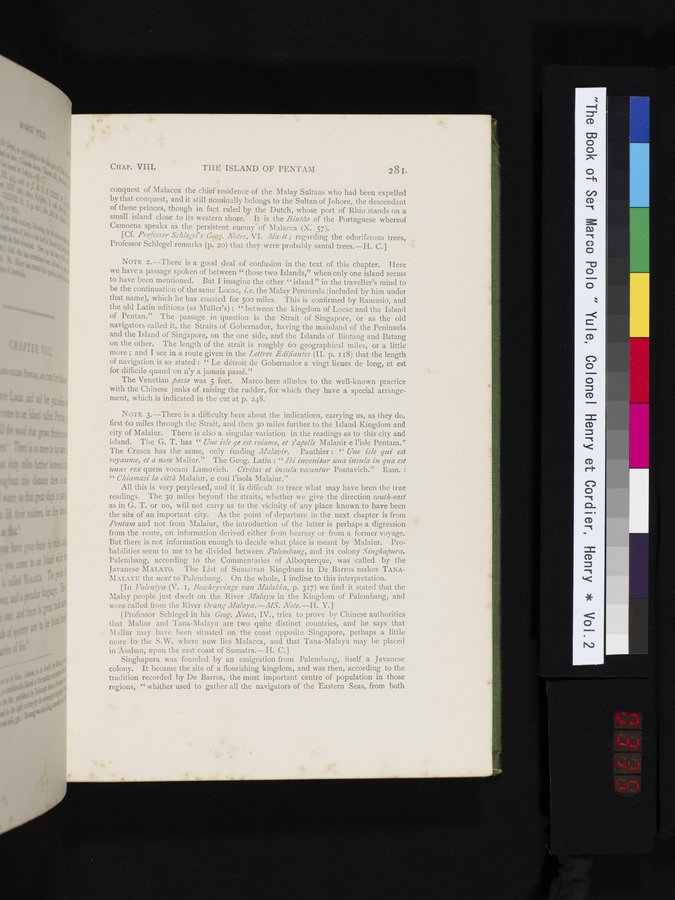
conquest of Malacca the chief residence of the Malay Sultans who had been expelled
by that conquest, and it still nominally belongs to the Sultan of Johore, the descendant
of those princes, though in fact ruled by the Dutch, whose port of Rhio stands on a
small island close to its western shore. It is the *Bintão* of the Portuguese whereof
Camoens speaks as the persistent enemy of Malacca (X. 57).
[Cf. *Professor Schlegel's Geog. Notes*, VI. *Ma-it*; regarding the odoriferous trees,
Professor Schlegel remarks (p. 20) that they were probably santal trees.—H. C.]
Note 2.—There is a good deal of confusion in the text of this chapter. Here
we have a passage spoken of between "those two Islands," when only one island seems
to have been mentioned. But I imagine the other "island" in the traveller's mind to
be the continuation of the same Locac, *i.e.* the Malay Peninsula (included by him under
that name), which he has coasted for 500 miles. This is confirmed by Ramusio, and
the old Latin editions (as Müller's): "between the kingdom of Locac and the Island
of Pentan." The passage in question is the Strait of Singapore, or as the old
navigators called it, the Straits of Gobernador, having the mainland of the Peninsula
and the Island of Singapore, on the one side, and the Islands of Bintang and Batang
on the other. The length of the strait is roughly 60 geographical miles, or a little
more; and I see in a route given in the *Lettres Edifiantes* (II. p. 118) that the length
of navigation is so stated: "Le détroit de Gobernador a vingt lieues de long, et est
for difficile quand on n'y a jamais passé."
The Venetian *passo* was 5 feet. Marco here alludes to the well-known practice
with the Chinese junks of raising the rudder, for which they have a special arrange-
ment, which is indicated in the cut at p. 248.
Note 3.—There is a difficulty here about the indications, carrying us, as they do,
first 60 miles through the Strait, and then 30 miles further to the Island Kingdom and
city of Malaiur. There is also a singular variation in the readings as to this city and
island. The G. T. has "*Une isle qe est roiame, et s'apelle* Malanir e l'Isle Pentam."
The Crusca has the same, only reading *Malavir*. Pauthier: "*Une isle qui est
royaume, et a nom* Maliur." The Geog. Latin: "*Ibi invenitur una insula in qua est
unus rex* quem vocant Lamovich. *Civitas et insula vocantur* Pontavich." Ram.:
"*Chiamasi la città* Malaiur, e così l'isola Malaiur."
All this is very perplexed, and it is difficult to trace what may have been the true
readings. The 30 miles beyond the straits, whether we give the direction *south-east*
as in G. T. or no, will not carry us to the vicinity of any place known to have been
the site of an important city. As the point of departure in the next chapter is from
*Pentam* and not from Malaiur, the introduction of the latter is perhaps a digression
from the route, on information derived either from hearsay or from a former voyage.
But there is not information enough to decide what place is meant by Malaiur. Pro-
babilities seem to me to be divided between *Palembang*, and its colony *Singhapura*.
Palembang, according to the Commentaries of Alboquerque, was called by the
Javanese MALAYO. The List of Sumutran Kingdoms in De Barros makes Tana-
Malayu the *next* to Palembang. On the whole, I incline to this interpretation.
[In *Valentyn* (V. 1, *Beschryvinge van Malakka*, p. 317) we find it stated that the
Malay people just dwelt on the River *Malayu* in the Kingdom of Palembang, and
were called from the River *Orang Malayu*.—*MS. Note*.—H. Y.]
[Professor Schlegel in his *Geog. Notes*, IV., tries to prove by Chinese authorities
that Maliur and Tana-Malayu are two quite distinct countries, and he says that
Maliur may have been situated on the coast opposite Singapore, perhaps a little
more to the S.W. where now lies Malacca, and that Tana-Malayu may be placed
in Asahan, upon the east coast of Sumatra.—H. C.]
Singhapura was founded by an emigration from Palembang, itself a Javanese
colony. It became the site of a flourishing kingdom, and was then, according to the
tradition recorded by De Barros, the most important centre of population in those
regions, "whither used to gather all the navigators of the Eastern Seas, from both
1
.
.
.
.
|
.
.
.
.
16
.
.
.
.
|
.
.
.
.
26
.
.
.
.
|
.
.
.
.
38
.
.
.
.
|
.
.
.
.
48
.
.
.
.
|
.
.
.
.
58
.
.
.
.
|
.
.
.
.
69
.
.
.
.
|
.
.
.
.
79
.
.
.
.
|
.
.
.
.
89
.
.
.
.
|
.
.
.
.
99
.
.
.
.
|
.
.
.
.
109
.
.
.
.
|
.
.
.
.
121
.
.
.
.
|
.
.
.
.
131
.
.
.
.
|
.
.
.
.
141
.
.
.
.
|
.
.
.
.
152
.
.
.
.
|
.
.
.
.
162
.
.
.
.
|
.
.
.
.
173
.
.
.
.
|
.
.
.
.
183
.
.
.
.
|
.
.
.
.
194
.
.
.
.
|
.
.
.
.
204
.
.
.
.
|
.
.
.
.
214
.
.
.
.
|
.
.
.
.
224
.
.
.
.
|
.
.
.
.
235
.
.
.
.
|
.
.
.
.
246
.
.
.
.
|
.
.
.
.
256
.
.
.
.
|
.
.
.
.
267
.
.
.
.
|
.
.
.
.
277
.
.
.
.
|
.
.
.
.
287
.
.
.
.
|
.
.
.
.
299
.
.
.
.
|
.
.
.
.
310
.
.
.
.
|
.
.
.
.
320
.
.
.
.
|
.
.
.
.
330
.
.
333
334
335
336
337
.
.
340
.
.
.
.
|
.
.
.
.
350
.
.
.
.
|
.
.
.
.
360
.
.
.
.
|
.
.
.
.
371
.
.
.
.
|
.
.
.
.
381
.
.
.
.
|
.
.
.
.
391
.
.
.
.
|
.
.
.
.
401
.
.
.
.
|
.
.
.
.
411
.
.
.
.
|
.
.
.
.
421
.
.
.
.
|
.
.
.
.
431
.
.
.
.
|
.
.
.
.
442
.
.
.
.
|
.
.
.
.
452
.
.
.
.
|
.
.
.
.
462
.
.
.
.
|
.
.
.
.
472
.
.
.
.
|
.
.
.
.
482
.
.
.
.
|
.
.
.
.
492
.
.
.
.
|
.
.
.
.
503
.
.
.
.
|
.
.
.
.
513
.
.
.
.
|
.
.
.
.
524
.
.
.
.
|
.
.
.
.
534
.
.
.
.
|
.
.
.
.
545
.
.
.
.
|
.
.
.
.
555
.
.
.
.
|
.
.
.
.
567
.
.
.
.
|
.
.
.
.
577
.
.
.
.
|
.
.
.
.
587
.
.
.
.
|
.
.
.
.
597
.
.
.
.
|
.
.
.
.
607
.
.
.
.
|
.
.
.
.
617
.
.
.
.
|
.
.
.
.
627
.
.
.
.
|
.
.
.
.
637
.
.
.
.
|
.
.
.
.
647
.
.
.
.
|
.
.
.
.
658
.
.
.
.
|
.
.
.
.
668
.
.
.
.
|
.
.
.
.
678
.
.
.
.
|
.
.
.
.
688
.
.
.
.
|
.
.
.
.
698
.
.
.
.
|
.
.
.
.
708
.
.
.
.
|
.
.
.
.
718
.
.
.
.
|
.
.
.
.
731
732
Copyright (C) 2003-2026
National Institute of Informatics(国立情報学研究所)
and
The Toyo Bunko(東洋文庫). All Rights Reserved.
本ウェブサイトに掲載するデジタル文化資源の無断転載は固くお断りいたします。