National Institute of Informatics - Digital Silk Road Project
Digital Archive of Toyo Bunko Rare Books
|
|
Color Thumbnail -
Table of Contents -
Page Number -
Biliographic Information (Metadata) -
Caption -
Color Image -
Gray HighRes. Image -
Facing Pages -
Graphics -
| 0279 |
Southern Tibet : vol.4 |
 Citation Information
OCR Text
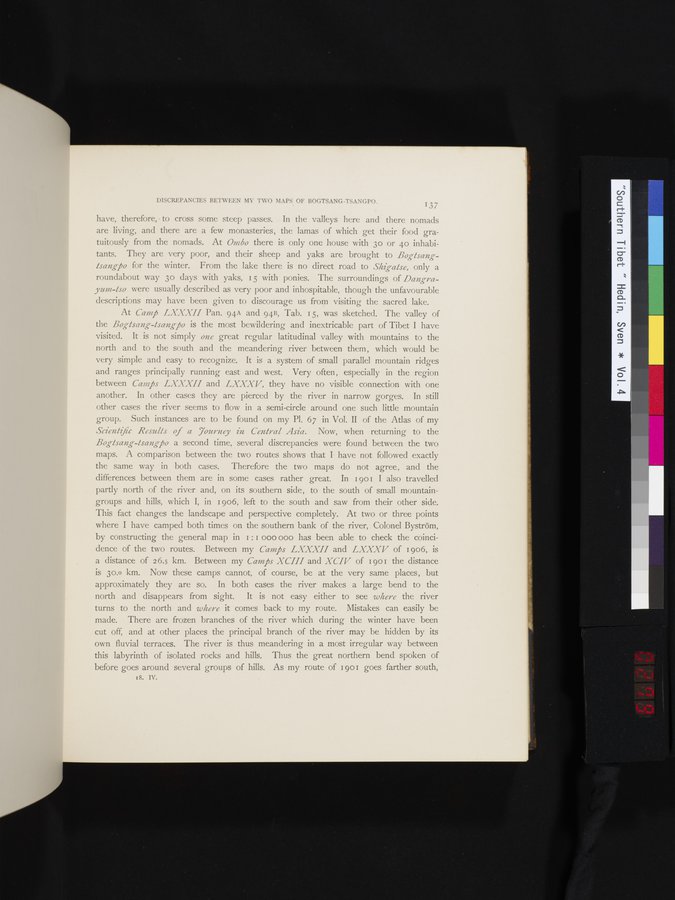
have, therefore, to cross some steep passes. In the valleys here and there nomads
are living, and there are a few monasteries, the lamas of which get their food gra-
tuitously from the nomads. At *Ombo* there is only one house with 30 or 40 inhabi-
tants. They are very poor, and their sheep and yaks are brought to *Bogtsang-
tsangpo* for the winter. From the lake there is no direct road to *Shigatse*, only a
roundabout way 30 days with yaks, 15 with ponies. The surroundings of *Dangra-
yum-tso* were usually described as very poor and inhospitable, though the unfavourable
descriptions may have been given to discourage us from visiting the sacred lake.
At *Camp LXXXII* Pan. 94A and 94B, Tab. 15, was sketched. The valley of
the *Bogtsang-tsangpo* is the most bewildering and inextricable part of Tibet I have
visited. It is not simply *one* great regular latitudinal valley with mountains to the
north and to the south and the meandering river between them, which would be
very simple and easy to recognize. It is a system of small parallel mountain ridges
and ranges principally running east and west. Very often, especially in the region
between *Camps LXXXII* and *LXXXV*, they have no visible connection with one
another. In other cases they are pierced by the river in narrow gorges. In still
other cases the river seems to flow in a semi-circle around one such little mountain
group. Such instances are to be found on my Pl. 67 in Vol. II of the Atlas of my
*Scientific Results of a Journey in Central Asia*. Now, when returning to the
*Bogtsang-tsangpo* a second time, several discrepancies were found between the two
maps. A comparison between the two routes shows that I have not followed exactly
the same way in both cases. Therefore the two maps do not agree, and the
differences between them are in some cases rather great. In 1901 I also travelled
partly north of the river and, on its southern side, to the south of small mountain-
groups and hills, which I, in 1906, left to the south and saw from their other side.
This fact changes the landscape and perspective completely. At two or three points
where I have camped both times on the southern bank of the river, Colonel Byström,
by constructing the general map in 1 : 1 000 000 has been able to check the coinci-
dence of the two routes. Between my *Camps LXXXII* and *LXXXV* of 1906, is
a distance of 26.5 km. Between my *Camps XCIII* and *XCIV* of 1901 the distance
is 30.9 km. Now these camps cannot, of course, be at the very same places, but
approximately they are so. In both cases the river makes a large bend to the
north and disappears from sight. It is not easy either to see *where* the river
turns to the north and *where* it comes back to my route. Mistakes can easily be
made. There are frozen branches of the river which during the winter have been
cut off, and at other places the principal branch of the river may be hidden by its
own fluvial terraces. The river is thus meandering in a most irregular way between
this labyrinth of isolated rocks and hills. Thus the great northern bend spoken of
before goes around several groups of hills. As my route of 1901 goes farther south,
18. IV.
1
.
.
.
.
|
.
.
.
.
16
.
.
.
.
|
.
.
.
.
29
.
.
.
.
|
.
.
.
.
43
.
.
.
.
|
.
.
.
.
57
.
.
.
.
|
.
.
.
.
68
.
.
.
.
|
.
.
.
.
81
.
.
.
.
|
.
.
.
.
92
.
.
.
.
|
.
.
.
.
107
.
.
.
.
|
.
.
.
.
119
.
.
.
.
|
.
.
.
.
131
.
.
.
.
|
.
.
.
.
144
.
.
.
.
|
.
.
.
.
162
.
.
.
.
|
.
.
.
.
177
.
.
.
.
|
.
.
.
.
190
.
.
.
.
|
.
.
.
.
205
.
.
.
.
|
.
.
.
.
219
.
.
.
.
|
.
.
.
.
230
.
.
.
.
|
.
.
.
.
241
.
.
.
.
|
.
.
.
.
253
.
.
.
.
|
.
.
.
.
266
.
.
.
.
|
.
.
275
277
279
280
281
.
.
|
.
.
.
.
291
.
.
.
.
|
.
.
.
.
302
.
.
.
.
|
.
.
.
.
315
.
.
.
.
|
.
.
.
.
327
.
.
.
.
|
.
.
.
.
339
.
.
.
.
|
.
.
.
.
354
.
.
.
.
|
.
.
.
.
366
.
.
.
.
|
.
.
.
.
379
.
.
.
.
|
.
.
.
.
393
.
.
.
.
|
.
.
.
.
404
.
.
.
.
|
.
.
.
.
416
.
.
.
.
|
.
.
.
.
429
.
.
.
.
|
.
.
.
.
441
.
.
.
.
|
.
.
.
.
453
.
.
.
.
|
.
.
.
.
464
.
.
.
.
|
.
.
.
.
474
.
.
.
.
|
.
.
.
.
484
.
.
.
.
|
.
.
.
.
495
.
.
.
.
|
.
.
.
.
505
.
.
.
.
|
.
.
.
.
519
.
.
.
.
|
.
.
.
.
529
.
.
.
.
|
.
.
.
.
541
.
.
.
.
|
.
.
.
.
552
.
.
.
.
|
.
.
.
.
568
.
.
.
.
|
.
.
.
.
583
.
.
.
.
|
.
.
.
.
600
.
.
.
.
|
.
.
.
.
615
.
.
.
.
|
.
.
.
.
629
.
.
.
.
|
.
.
.
.
643
.
.
.
.
|
.
.
.
.
654
.
.
.
.
|
.
.
.
.
665
.
.
.
.
|
.
.
.
.
677
.
.
.
.
|
.
.
.
.
692
.
.
.
.
|
.
.
.
.
707
.
.
.
.
|
.
.
.
.
725
.
.
.
.
|
.
.
.
.
736
.
.
.
.
|
.
.
.
.
746
.
.
.
756
Copyright (C) 2003-2026
National Institute of Informatics
and
The Toyo Bunko. All Rights Reserved.