National Institute of Informatics - Digital Silk Road Project
Digital Archive of Toyo Bunko Rare Books
|
|
Color Thumbnail -
Table of Contents -
Page Number -
Biliographic Information (Metadata) -
Caption -
Color Image -
Gray HighRes. Image -
Facing Pages -
Graphics -
| 0299 |
Report of a Mission to Yarkund in 1873 : vol.1 |
 Citation Information
OCR Text
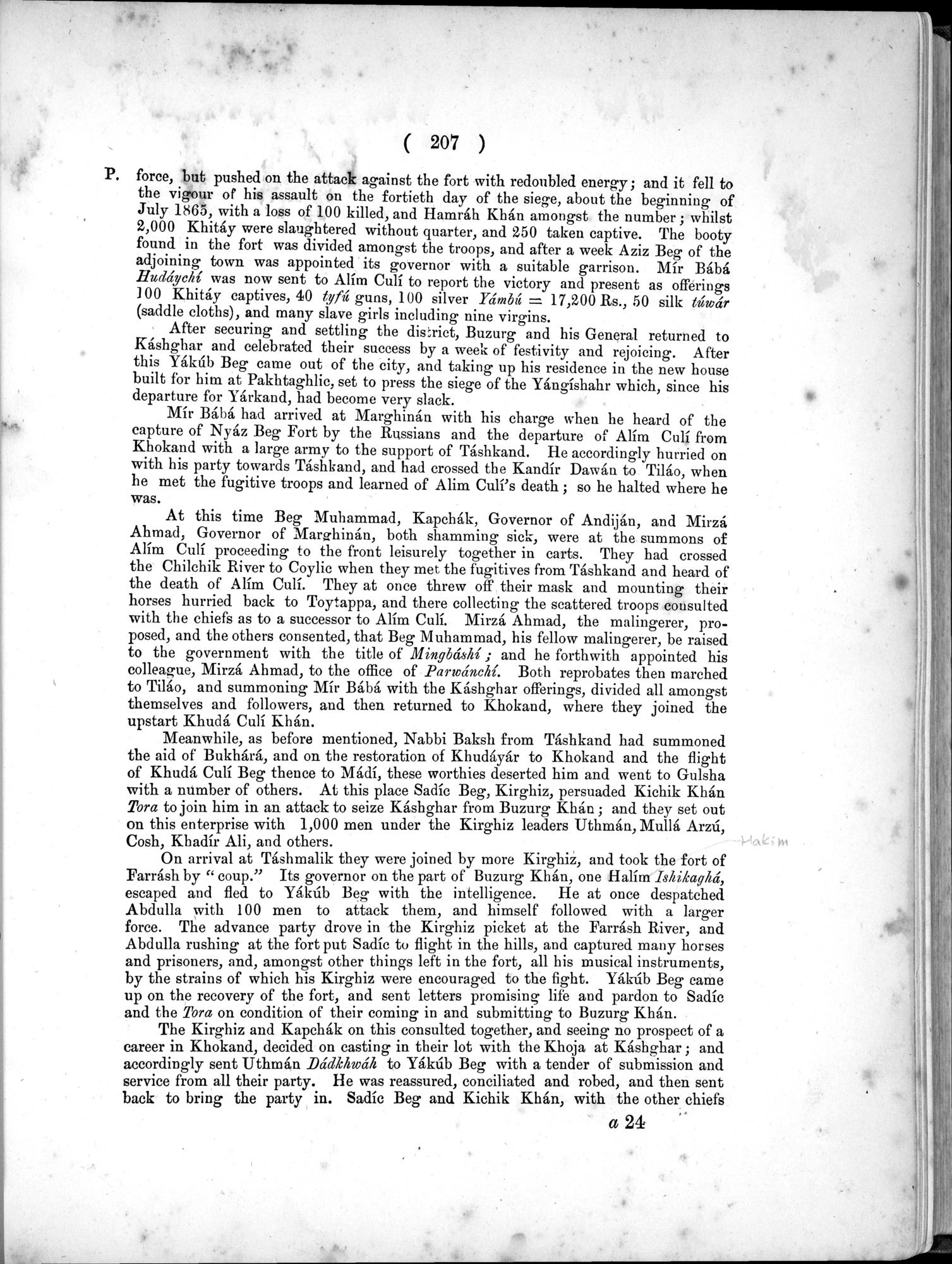
P. force, but pushed on the attack against the fort with redoubled energy; and it fell to
the vigour of his assault on the fortieth day of the siege, about the beginning of
July 1865, with a loss of 100 killed, and Hamráh Khán amongst the number; whilst
2,000 Khitáy were slaughtered without quarter, and 250 taken captive. The booty
found in the fort was divided amongst the troops, and after a week Aziz Beg of the
adjoining town was appointed its governor with a suitable garrison. Mír Bábá
Hudáychí was now sent to Alim Culí to report the victory and present as offerings
100 Khitáy captives, 40 tyfú guns, 100 silver Yámbú = 17,200 Rs., 50 silk túvár
(saddle cloths), and many slave girls including nine virgins.
After securing and settling the district, Buzurg and his General returned to
Káshghar and celebrated their success by a week of festivity and rejoicing. After
this Yákúb Beg came out of the city, and taking up his residence in the new house
built for him at Pakhtaghlic, set to press the siege of the Yángishahr which, since his
departure for Yárkand, had become very slack.
Mír Bábá had arrived at Marghinán with his charge when he heard of the
capture of Nyáz Beg Fort by the Russians and the departure of Alim Culí from
Khokand with a large army to the support of Táshkand. He accordingly hurried on
with his party towards Táshkand, and had crossed the Kandír Dawán to Tiláo, when
he met the fugitive troops and learned of Alim Culí's death; so he halted where he
was.
At this time Beg Muhammad, Kapchák, Governor of Andiján, and Mirzá
Ahmad, Governor of Marghinán, both shamming sick, were at the summons of
Alím Culí proceeding to the front leisurely together in carts. They had crossed
the Chilchik River to Coylic when they met the fugitives from Táshkand and heard of
the death of Alím Culí. They at once threw off their mask and mounting their
horses hurried back to Toytappa, and there collecting the scattered troops consulted
with the chiefs as to a successor to Alím Culí. Mirzá Ahmad, the malingerer, pro-
posed, and the others consented, that Beg Muhammad, his fellow malingerer, be raised
to the government with the title of Mingbáshí; and he forthwith appointed his
colleague, Mirzá Ahmad, to the office of Parwánchí. Both reprobates then marched
to Tiláo, and summoning Mír Bábá with the Káshghar offerings, divided all amongst
themselves and followers, and then returned to Khokand, where they joined the
upstart Khudá Culí Khán.
Meanwhile, as before mentioned, Nabbi Baksh from Táshkand had summoned
the aid of Bukhárá, and on the restoration of Khudáyár to Khokand and the flight
of Khudá Culí Beg thence to Mádí, these worthies deserted him and went to Gulsha
with a number of others. At this place Sadíc Beg, Kirghiz, persuaded Kichik Khán
Tora to join him in an attack to seize Káshghar from Buzurg Khán; and they set out
on this enterprise with 1,000 men under the Kirghiz leaders Uthmán, Mullá Arzú,
Cosh, Khadír Ali, and others.
On arrival at Táshmalik they were joined by more Kirghiz, and took the fort of
Farrásh by "coup." Its governor on the part of Buzurg Khán, one Halím Ishikaghá,
escaped and fled to Yákúb Beg with the intelligence. He at once despatched
Abdulla with 100 men to attack them, and himself followed with a larger
force. The advance party drove in the Kirghiz picket at the Farrásh River, and
Abdulla rushing at the fort put Sadíc to flight in the hills, and captured many horses
and prisoners, and, amongst other things left in the fort, all his musical instruments,
by the strains of which his Kirghiz were encouraged to the fight. Yákúb Beg came
up on the recovery of the fort, and sent letters promising life and pardon to Sadíc
and the Tora on condition of their coming in and submitting to Buzurg Khán.
The Kirghiz and Kapchák on this consulted together, and seeing no prospect of a
career in Khokand, decided on casting in their lot with the Khoja at Káshghar; and
accordingly sent Uthmán Dádkhwáh to Yákúb Beg with a tender of submission and
service from all their party. He was reassured, conciliated and robed, and then sent
back to bring the party in. Sadíc Beg and Kichik Khán, with the other chiefs
a 24
1
.
.
.
.
|
.
.
.
.
12
.
.
.
.
|
.
.
.
.
22
.
.
.
.
|
.
.
.
.
34
.
.
.
.
|
.
.
.
.
45
.
.
.
.
|
.
.
.
.
57
.
.
.
.
|
.
.
.
.
69
.
.
.
.
|
.
.
.
.
80
.
.
.
.
|
.
.
.
.
92
.
.
.
.
|
.
.
.
.
103
.
.
.
.
|
.
.
.
.
114
.
.
.
.
|
.
.
.
.
126
.
.
.
.
|
.
.
.
.
137
.
.
.
.
|
.
.
.
.
148
.
.
.
.
|
.
.
.
.
159
.
.
.
.
|
.
.
.
.
169
.
.
.
.
|
.
.
.
.
179
.
.
.
.
|
.
.
.
.
191
.
.
.
.
|
.
.
.
.
203
.
.
.
.
|
.
.
.
.
214
.
.
.
.
|
.
.
.
.
225
.
.
.
.
|
.
.
.
.
237
.
.
.
.
|
.
.
.
.
248
.
.
.
.
|
.
.
.
.
258
.
.
.
.
|
.
.
.
.
270
.
.
.
.
|
.
.
.
.
281
.
.
.
.
|
.
.
.
.
293
.
.
296
297
299
300
301
.
.
304
.
.
.
.
|
.
.
.
.
316
.
.
.
.
|
.
.
.
.
327
.
.
.
.
|
.
.
.
.
337
.
.
.
.
|
.
.
.
.
350
.
.
.
.
|
.
.
.
.
363
.
.
.
.
|
.
.
.
.
374
.
.
.
.
|
.
.
.
.
385
.
.
.
.
|
.
.
.
.
396
.
.
.
.
|
.
.
.
.
407
.
.
.
.
|
.
.
.
.
419
.
.
.
.
|
.
.
.
.
432
.
.
.
.
|
.
.
.
.
442
.
.
.
.
|
.
.
.
.
452
.
.
.
.
|
.
.
.
.
462
.
.
.
.
|
.
.
.
.
472
.
.
.
.
|
.
.
.
.
482
.
.
.
.
|
.
.
.
.
492
.
.
.
.
|
.
.
.
.
502
.
.
.
.
|
.
.
.
.
512
.
.
.
.
|
.
.
.
.
522
.
.
.
.
|
.
.
.
.
532
.
.
.
.
|
.
.
.
.
542
.
.
.
.
|
.
.
.
.
552
.
.
.
.
|
.
.
.
.
562
.
.
.
.
|
.
.
.
.
572
.
.
.
.
|
.
.
.
.
582
.
.
.
.
|
.
.
.
.
592
.
.
.
.
|
.
.
.
.
602
.
.
.
.
|
.
.
.
.
612
.
.
.
.
|
.
.
.
.
622
.
.
.
.
|
.
.
.
.
632
.
.
.
.
|
.
.
.
.
642
.
.
.
.
|
.
.
.
.
652
.
.
.
.
|
.
.
.
.
662
.
.
.
.
|
.
.
.
.
672
.
.
.
.
|
.
.
.
.
682
.
.
.
.
|
.
.
.
.
692
.
.
.
.
|
.
.
.
.
702
.
.
.
.
|
.
.
.
.
712
.
714
Copyright (C) 2003-2026
National Institute of Informatics
and
The Toyo Bunko. All Rights Reserved.