国立情報学研究所 - ディジタル・シルクロード・プロジェクト
『東洋文庫所蔵』貴重書デジタルアーカイブ
|
|
カラー画像サムネイル -
目次 -
ページ番号 -
書誌情報(メタデータ) -
キャプション -
カラー画像 -
白黒高解像度画像 -
見開きページ -
グラフィック -
| 0031 |
Archaeological Researches in Sinkiang : vol.1 |
| 新疆の考古学的調査 : vol.1 |
キャプション
| [] 4 |
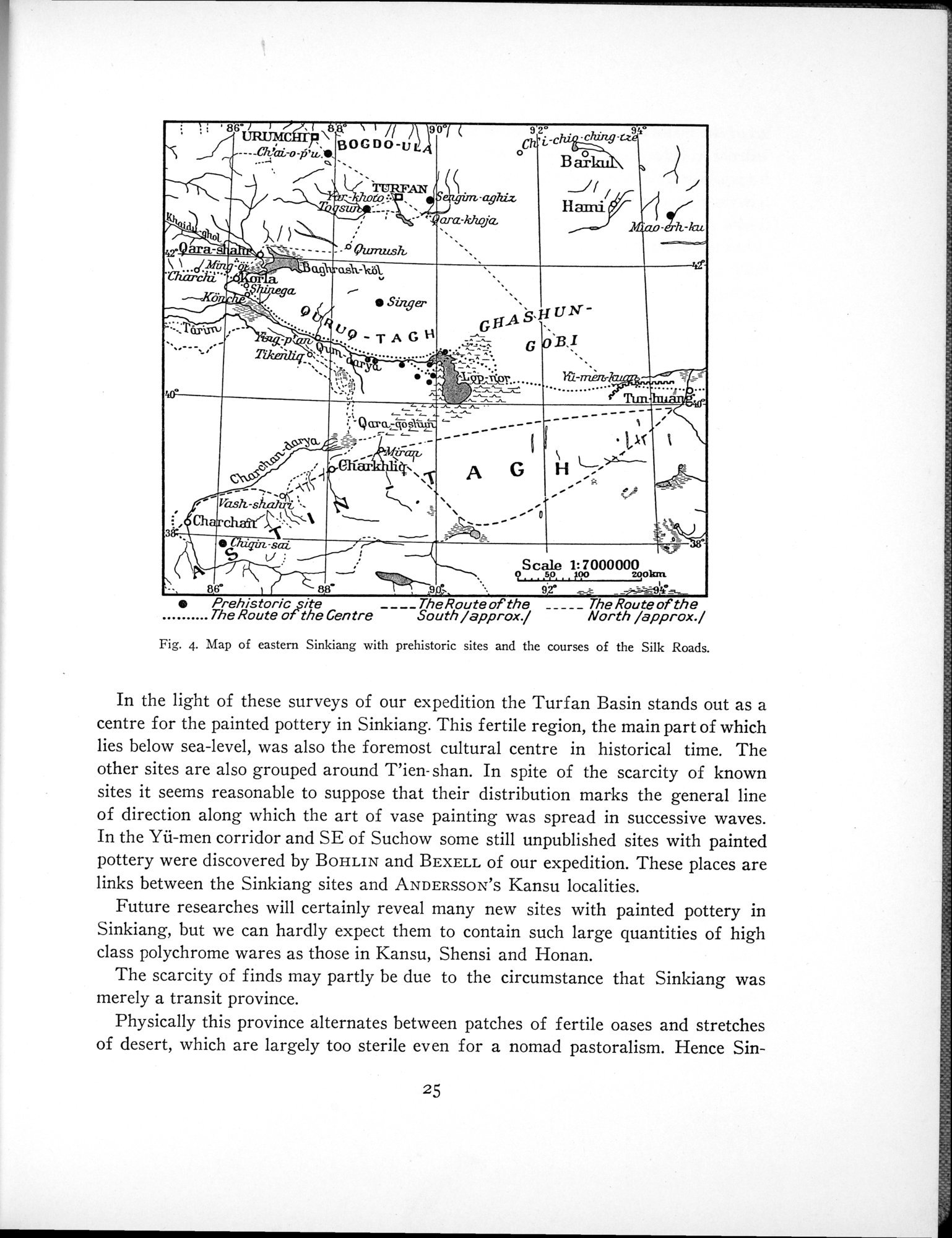
新疆東部にある先史時代の遺跡とシルクロードの進路Map of eastern Sinkiang with prehistoric sites and the courses of the Silk Roads.
|
 引用情報
OCR読み取り結果
In the light of these surveys of our expedition the Turfan Basin stands out as a
centre for the painted pottery in Sinkiang. This fertile region, the main part of which
lies below sea-level, was also the foremost cultural centre in historical time. The
other sites are also grouped around T'ien-shan. In spite of the scarcity of known
sites it seems reasonable to suppose that their distribution marks the general line
of direction along which the art of vase painting was spread in successive waves.
In the Yü-men corridor and SE of Suchow some still unpublished sites with painted
pottery were discovered by Bohlin and Bexell of our expedition. These places are
links between the Sinkiang sites and Andersson's Kansu localities.
Future researches will certainly reveal many new sites with painted pottery in
Sinkiang, but we can hardly expect them to contain such large quantities of high
class polychrome wares as those in Kansu, Shensi and Honan.
The scarcity of finds may partly be due to the circumstance that Sinkiang was
merely a transit province.
Physically this province alternates between patches of fertile oases and stretches
of desert, which are largely too sterile even for a nomad pastoralism. Hence Sin-
25
1
.
.
.
.
|
.
.
.
.
11
.
.
.
.
|
.
.
.
.
21
.
.
.
.
|
.
.
29
30
31
32
33
.
.
|
.
.
.
.
41
.
.
.
.
|
.
.
.
.
51
.
.
.
.
|
.
.
.
.
61
.
.
.
.
|
.
.
.
.
71
.
.
.
.
|
.
.
.
.
81
.
.
.
.
|
.
.
.
.
91
.
.
.
.
|
.
.
.
.
101
.
.
.
.
|
.
.
.
.
111
.
.
.
.
|
.
.
.
.
121
.
.
.
.
|
.
.
.
.
131
.
.
.
.
|
.
.
.
.
141
.
.
.
.
|
.
.
.
.
151
.
.
.
.
|
.
.
.
.
161
.
.
.
.
|
.
.
.
.
171
.
.
.
.
|
.
.
.
.
181
.
.
.
.
|
.
.
.
.
191
.
.
.
.
|
.
.
.
.
201
.
.
.
.
|
.
.
.
.
211
.
.
.
.
|
.
.
.
.
221
.
.
.
.
|
.
.
.
.
231
.
.
.
.
|
.
.
.
.
241
.
.
.
.
|
.
.
.
.
251
.
.
.
.
|
.
.
.
.
261
.
.
.
.
|
.
.
.
.
271
.
.
.
.
|
.
.
.
.
281
.
.
.
.
|
.
.
.
.
293
.
.
.
.
|
.
.
.
.
303
.
.
.
.
|
.
.
.
.
313
.
.
.
.
|
.
.
.
.
323
.
.
.
.
|
.
.
.
332
Copyright (C) 2003-2026
National Institute of Informatics(国立情報学研究所)
and
The Toyo Bunko(東洋文庫). All Rights Reserved.
本ウェブサイトに掲載するデジタル文化資源の無断転載は固くお断りいたします。