国立情報学研究所 - ディジタル・シルクロード・プロジェクト
『東洋文庫所蔵』貴重書デジタルアーカイブ
|
|
カラー画像サムネイル -
目次 -
ページ番号 -
書誌情報(メタデータ) -
キャプション -
カラー画像 -
白黒高解像度画像 -
見開きページ -
グラフィック -
| 0637 |
Ruins of Desert Cathay : vol.2 |
| 中国砂漠地帯の遺跡 : vol.2 |
 引用情報
OCR読み取り結果
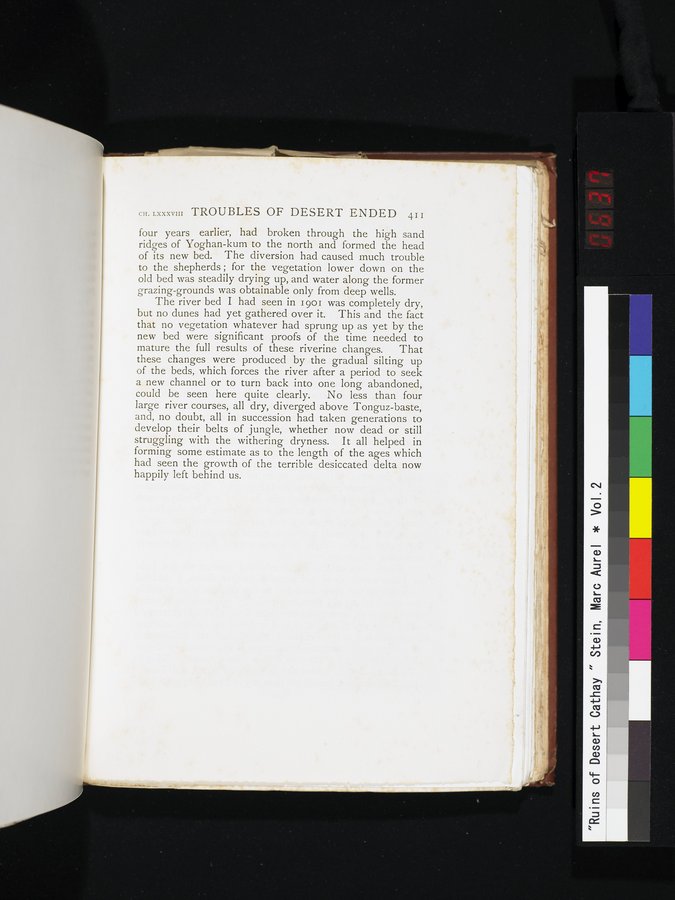
four years earlier, had broken through the high sand
ridges of Yoghan-kum to the north and formed the head
of its new bed. The diversion had caused much trouble
to the shepherds; for the vegetation lower down on the
old bed was steadily drying up, and water along the former
grazing-grounds was obtainable only from deep wells.
The river bed I had seen in 1901 was completely dry,
but no dunes had yet gathered over it. This and the fact
that no vegetation whatever had sprung up as yet by the
new bed were significant proofs of the time needed to
mature the full results of these riverine changes. That
these changes were produced by the gradual silting up
of the beds, which forces the river after a period to seek
a new channel or to turn back into one long abandoned,
could be seen here quite clearly. No less than four
large river courses, all dry, diverged above Tonguz-baste,
and, no doubt, all in succession had taken generations to
develop their belts of jungle, whether now dead or still
struggling with the withering dryness. It all helped in
forming some estimate as to the length of the ages which
had seen the growth of the terrible desiccated delta now
happily left behind us.
1
.
.
.
.
|
.
.
.
.
12
.
.
.
.
|
.
.
.
.
22
.
.
.
.
|
.
.
.
.
32
.
.
.
.
|
.
.
.
.
43
.
.
.
.
|
.
.
.
.
53
.
.
.
.
|
.
.
.
.
67
.
.
.
.
|
.
.
.
.
78
.
.
.
.
|
.
.
.
.
89
.
.
.
.
|
.
.
.
.
100
.
.
.
.
|
.
.
.
.
110
.
.
.
.
|
.
.
.
.
120
.
.
.
.
|
.
.
.
.
131
.
.
.
.
|
.
.
.
.
142
.
.
.
.
|
.
.
.
.
155
.
.
.
.
|
.
.
.
.
166
.
.
.
.
|
.
.
.
.
178
.
.
.
.
|
.
.
.
.
188
.
.
.
.
|
.
.
.
.
199
.
.
.
.
|
.
.
.
.
210
.
.
.
.
|
.
.
.
.
220
.
.
.
.
|
.
.
.
.
231
.
.
.
.
|
.
.
.
.
245
.
.
.
.
|
.
.
.
.
256
.
.
.
.
|
.
.
.
.
268
.
.
.
.
|
.
.
.
.
279
.
.
.
.
|
.
.
.
.
293
.
.
.
.
|
.
.
.
.
308
.
.
.
.
|
.
.
.
.
319
.
.
.
.
|
.
.
.
.
332
.
.
.
.
|
.
.
.
.
345
.
.
.
.
|
.
.
.
.
359
.
.
.
.
|
.
.
.
.
370
.
.
.
.
|
.
.
.
.
382
.
.
.
.
|
.
.
.
.
395
.
.
.
.
|
.
.
.
.
407
.
.
.
.
|
.
.
.
.
419
.
.
.
.
|
.
.
.
.
431
.
.
.
.
|
.
.
.
.
442
.
.
.
.
|
.
.
.
.
453
.
.
.
.
|
.
.
.
.
465
.
.
.
.
|
.
.
.
.
478
.
.
.
.
|
.
.
.
.
491
.
.
.
.
|
.
.
.
.
505
.
.
.
.
|
.
.
.
.
518
.
.
.
.
|
.
.
.
.
529
.
.
.
.
|
.
.
.
.
540
.
.
.
.
|
.
.
.
.
553
.
.
.
.
|
.
.
.
.
567
.
.
.
.
|
.
.
.
.
581
.
.
.
.
|
.
.
.
.
594
.
.
.
.
|
.
.
.
.
605
.
.
.
.
|
.
.
.
.
617
.
.
.
.
|
.
.
.
.
629
.
.
.
634
635
637
638
639
.
642
.
.
.
.
|
.
.
.
.
657
.
.
.
.
|
.
.
.
.
670
.
.
.
.
|
.
.
.
.
683
.
.
.
.
|
.
.
.
.
696
.
.
.
.
|
.
.
.
.
709
.
.
.
.
|
.
.
.
.
723
.
.
.
.
|
.
.
.
.
736
.
.
.
.
|
.
.
.
.
749
.
.
.
.
|
.
.
.
.
760
.
.
.
.
|
.
.
.
.
771
.
.
.
.
|
.
.
.
.
783
.
.
.
.
|
.
.
.
.
793
.
.
.
.
|
.
.
.
.
803
.
.
.
.
|
.
.
.
.
813
814
Copyright (C) 2003-2026
National Institute of Informatics(国立情報学研究所)
and
The Toyo Bunko(東洋文庫). All Rights Reserved.
本ウェブサイトに掲載するデジタル文化資源の無断転載は固くお断りいたします。