National Institute of Informatics - Digital Silk Road Project
Digital Archive of Toyo Bunko Rare Books
|
|
Color Thumbnail -
Table of Contents -
Page Number -
Biliographic Information (Metadata) -
Caption -
Color Image -
Gray HighRes. Image -
Facing Pages -
Graphics -
| 0556 |
Southern Tibet : vol.7 |
 Citation Information
OCR Text
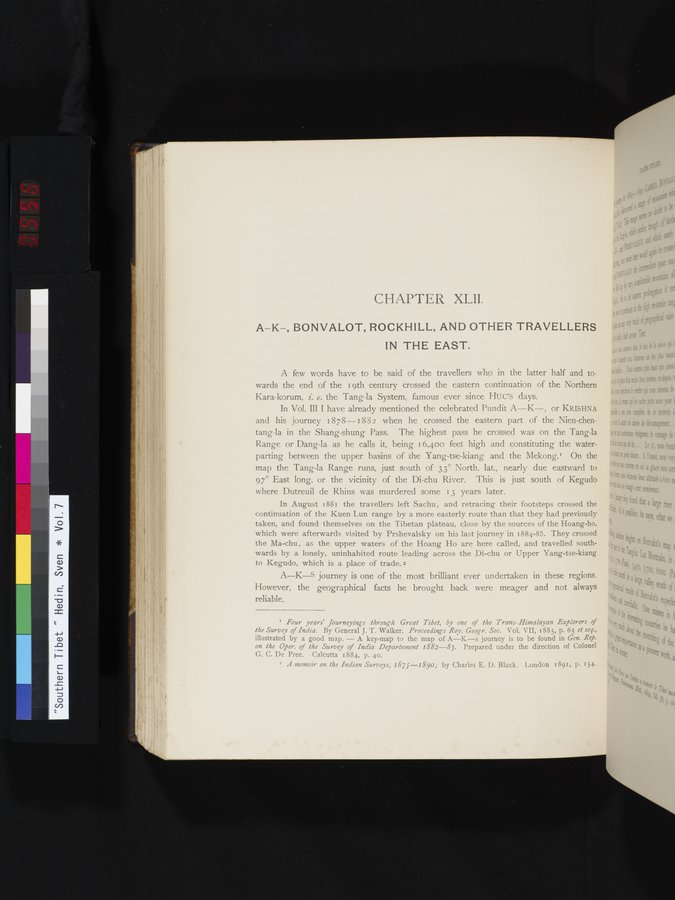
CHAPTER XLII.
A–K–, BONVALOT, ROCKHILL, AND OTHER TRAVELLERS
IN THE EAST.
A few words have to be said of the travellers who in the latter half and to-
wards the end of the 19th century crossed the eastern continuation of the Northern
Kara-korum, i. e. the Tang-la System, famous ever since HUC'S days.
In Vol. III I have already mentioned the celebrated Pundit A—K—, or KRISHNA
and his journey 1878—1882 when he crossed the eastern part of the Nien-chen-
tang-la in the Shang-shung Pass. The highest pass he crossed was on the Tang-la
Range or Dang-la as he calls it, being 16,400 feet high and constituting the water-
parting between the upper basins of the Yang-tse-kiang and the Mekong.¹ On the
map the Tang-la Range runs, just south of 33° North. lat., nearly due eastward to
97° East long. or the vicinity of the Di-chu River. This is just south of Kegudo
where Dutreuil de Rhins was murdered some 13 years later.
In August 1881 the travellers left Sachu, and retracing their footsteps crossed the
continuation of the Kuen Lun range by a more easterly route than that they had previously
taken, and found themselves on the Tibetan plateau, close by the sources of the Hoang-ho,
which were afterwards visited by Prshevalsky on his last journey in 1884-85. They crossed
the Ma-chu, as the upper waters of the Hoang Ho are here called, and travelled south-
wards by a lonely, uninhabited route leading across the Di-chu or Upper Yang-tse-kiang
to Kegudo, which is a place of trade. 2
A—K—S journey is one of the most brilliant ever undertaken in these regions.
However, the geographical facts he brought back were meager and not always
reliable.
1
.
.
.
.
|
.
.
.
.
17
.
.
.
.
|
.
.
.
.
28
.
.
.
.
|
.
.
.
.
38
.
.
.
.
|
.
.
.
.
49
.
.
.
.
|
.
.
.
.
60
.
.
.
.
|
.
.
.
.
70
.
.
.
.
|
.
.
.
.
81
.
.
.
.
|
.
.
.
.
92
.
.
.
.
|
.
.
.
.
105
.
.
.
.
|
.
.
.
.
117
.
.
.
.
|
.
.
.
.
128
.
.
.
.
|
.
.
.
.
138
.
.
.
.
|
.
.
.
.
150
.
.
.
.
|
.
.
.
.
161
.
.
.
.
|
.
.
.
.
177
.
.
.
.
|
.
.
.
.
190
.
.
.
.
|
.
.
.
.
202
.
.
.
.
|
.
.
.
.
214
.
.
.
.
|
.
.
.
.
225
.
.
.
.
|
.
.
.
.
237
.
.
.
.
|
.
.
.
.
251
.
.
.
.
|
.
.
.
.
263
.
.
.
.
|
.
.
.
.
277
.
.
.
.
|
.
.
.
.
291
.
.
.
.
|
.
.
.
.
302
.
.
.
.
|
.
.
.
.
315
.
.
.
.
|
.
.
.
.
329
.
.
.
.
|
.
.
.
.
342
.
.
.
.
|
.
.
.
.
352
.
.
.
.
|
.
.
.
.
363
.
.
.
.
|
.
.
.
.
375
.
.
.
.
|
.
.
.
.
386
.
.
.
.
|
.
.
.
.
397
.
.
.
.
|
.
.
.
.
407
.
.
.
.
|
.
.
.
.
420
.
.
.
.
|
.
.
.
.
432
.
.
.
.
|
.
.
.
.
444
.
.
.
.
|
.
.
.
.
457
.
.
.
.
|
.
.
.
.
467
.
.
.
.
|
.
.
.
.
478
.
.
.
.
|
.
.
.
.
488
.
.
.
.
|
.
.
.
.
499
.
.
.
.
|
.
.
.
.
510
.
.
.
.
|
.
.
.
.
520
.
.
.
.
|
.
.
.
.
530
.
.
.
.
|
.
.
.
.
541
.
.
.
.
|
.
.
.
.
552
553
555
556
557
558
.
.
.
.
563
.
.
.
.
|
.
.
.
.
573
.
.
.
.
|
.
.
.
.
583
.
.
.
.
|
.
.
.
.
593
.
.
.
.
|
.
.
.
.
605
.
.
.
.
|
.
.
.
.
615
.
.
.
.
|
.
.
.
.
625
.
.
.
.
|
.
.
.
.
635
.
.
.
.
|
.
.
.
.
646
.
.
.
.
|
.
.
.
.
656
.
.
.
.
|
.
.
.
.
666
.
.
.
.
|
.
.
.
.
681
.
.
.
.
|
.
.
.
.
693
.
.
.
.
|
.
.
.
.
704
.
.
.
.
|
.
.
.
.
714
.
.
.
.
|
.
.
.
.
726
.
.
.
.
|
.
.
.
.
737
.
.
.
.
|
.
.
.
.
747
.
.
.
.
|
.
.
.
.
758
.
.
.
.
|
.
.
.
.
773
.
.
.
.
|
.
.
.
.
788
.
.
.
.
|
.
.
.
.
801
.
.
.
.
|
.
.
.
.
813
.
.
.
.
|
.
.
.
.
833
.
.
.
.
|
.
.
.
.
848
.
.
.
.
|
.
.
.
.
864
.
.
.
.
|
.
.
.
.
876
.
.
.
.
|
888
Copyright (C) 2003-2026
National Institute of Informatics
and
The Toyo Bunko. All Rights Reserved.